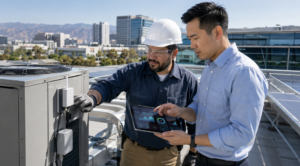
California’s technology sector has influenced nearly every aspect of modern life, from the way people communicate to the way businesses manage daily operations. Now, that same spirit of innovation is transforming how homes and commercial buildings are heated, cooled, ventilated, and maintained. In San Jose, where technological advancement is part of the city’s identity, heating and cooling systems are becoming more connected, responsive, and efficient.
Modern HVAC equipment can do far more than produce warm or cool air. Smart thermostats, connected sensors, automated controls, mobile applications, and advanced diagnostic software are giving property owners greater control over indoor comfort. These developments also allow HVAC professionals to identify performance problems earlier, reduce wasted energy, and provide more precise service.
For homeowners and businesses following California IT news, smart HVAC represents an important meeting point between physical equipment and digital technology. The result is a new generation of heating and cooling solutions designed around comfort, efficiency, reliability, and access to useful information.
California Technology Is Changing Building Comfort 🌐
Traditional heating and cooling systems generally operated according to a limited set of instructions. A thermostat measured the temperature, compared it with the selected setting, and told the equipment when to turn on or off. Although dependable, that approach could not account for many of the variables that influence comfort and energy consumption.
Smart systems collect and interpret more information. They may monitor temperature, humidity, occupancy, outdoor weather conditions, air quality, equipment runtime, and energy-use patterns. The system can then make controlled adjustments based on what is happening inside the building.
This development is closely connected to the broader growth of the Internet of Things, which allows physical devices to exchange information through connected networks. In an HVAC setting, this can include thermostats, air-quality monitors, dampers, sensors, heat pumps, furnaces, and air-conditioning equipment.
The value of connectivity goes beyond novelty. A system that recognizes an empty room can avoid conditioning that space unnecessarily. A thermostat that learns a household’s schedule can reduce operation during unoccupied periods. Commercial controls can coordinate multiple zones so that one section of a building is not excessively cooled while another remains uncomfortable.
Smart Thermostats Provide More Precise Control 📱
Smart thermostats are among the most familiar examples of IT entering the heating and cooling industry. These devices offer scheduling, remote access, energy reporting, automated adjustments, and compatibility with other connected products.
A homeowner can use a mobile application to adjust the temperature before returning from work. A business manager can review several thermostats without walking through an entire facility. Property managers responsible for multiple buildings can monitor settings from one location rather than relying entirely on manual inspections.
Remote access is especially valuable when San Jose experiences a sudden temperature change. Instead of leaving equipment running all day, occupants can make adjustments when necessary. Some systems also use geofencing to determine when authorized users are approaching or leaving a property.
The benefits extend to maintenance. Certain thermostats can provide filter reminders, unusual-runtime alerts, and general equipment notifications. These messages do not replace professional inspection, but they can encourage faster attention when a system begins operating differently.
The California Public Utilities Commission provides information about demand response, an energy-management strategy that can include connected controls and adjustments during periods of high electricity demand. Smart thermostats can help property owners participate more effectively in this changing energy environment.
Sensors Give HVAC Systems Better Information
A thermostat located in a hallway cannot always represent conditions throughout an entire home or commercial property. Sun exposure, ceiling height, windows, insulation, occupancy, and equipment placement can create significant differences from one room to another.
Connected sensors provide a broader view. Temperature sensors can identify areas that regularly become too warm or too cool. Humidity sensors can help determine whether indoor air feels damp or excessively dry. Occupancy sensors can tell a control system when specific rooms are being used. Air-quality devices may track particles, carbon dioxide, or other indoor conditions, depending on the equipment.
The U.S. Environmental Protection Agency’s indoor air quality resources explain how indoor conditions can affect health, comfort, and building occupants. Smart monitoring makes invisible changes easier to recognize, but professional evaluation remains important when a property has persistent ventilation, humidity, or air-quality concerns.
For local property owners considering a connected San Jose HVAC system, the goal should be useful performance rather than technology for its own sake. Sensors, controls, and applications provide the most value when they are properly selected, installed, and configured for the building.
Predictive Maintenance Can Reduce Unexpected Breakdowns 🔧
One of the most practical developments in smart HVAC is the ability to detect changes before a complete failure occurs. Heating and cooling systems create measurable operating data. Runtime, temperature differences, electrical demand, pressure, airflow, and cycling behavior can reveal important patterns.
Diagnostic tools can compare current performance with normal operating behavior. An air conditioner that suddenly runs longer to achieve the same temperature may have an airflow restriction, control problem, refrigerant issue, or aging component. A system that turns on and off too frequently may require professional attention. Connected monitoring can flag these changes earlier.
The National Institute of Standards and Technology has examined AI-assisted fault detection and diagnostic tools for air conditioners, heat pumps, and mechanical systems in buildings. This area of research demonstrates how information technology can support greater reliability and more informed maintenance decisions.
Predictive information does not eliminate the need for trained HVAC technicians. It gives those technicians better evidence. Instead of arriving with only a general description of the problem, a service professional may be able to review alerts, runtime history, and recent changes in performance. That information can make the diagnostic process more focused.
Early detection may also protect surrounding components. A relatively small problem can place additional strain on motors, compressors, electrical parts, and controls when it continues unresolved. Faster attention can help limit damage and reduce the likelihood of an inconvenient breakdown during extreme weather.
Building Automation Is Improving Commercial HVAC
San Jose’s offices, retail spaces, medical facilities, educational buildings, industrial properties, and technology campuses have more complicated comfort requirements than most homes. Different sections may have different schedules, occupancy levels, equipment loads, and ventilation needs.
Building automation systems bring those operations together. A central platform can coordinate HVAC equipment with lighting, occupancy sensors, ventilation, access controls, and other building systems. Facility teams can review conditions, receive alerts, identify abnormal operation, and adjust approved settings through a unified interface.
According to the U.S. Department of Energy’s information on building controls, high-performance controls can significantly reduce HVAC energy use in commercial buildings. The exact results for any property depend on the building, equipment, installation, operating schedule, and control strategy.
Automation can prevent several common sources of waste. Equipment can be scheduled according to actual building hours. Temperatures can be managed by zone. Ventilation can respond to occupancy where appropriate. Simultaneous heating and cooling can be identified and corrected. Facility personnel can also use performance reports to locate areas that require attention.
These capabilities are particularly relevant to California IT news because commercial HVAC is becoming part of a much larger digital building ecosystem. Mechanical equipment and IT infrastructure must work together without sacrificing reliability, safety, or ease of maintenance.
California Energy Standards Encourage Smarter Performance 🌱
California has long used building standards to advance energy efficiency. The state’s approach affects new construction, additions, alterations, equipment selection, controls, ventilation, and other parts of building performance.
The California Energy Commission’s Building Energy Efficiency Standards provide official information about the state’s energy codes and supporting resources. These standards evolve as technologies, construction practices, energy priorities, and performance expectations change.
Smart HVAC can support these goals by making energy use more visible and controllable. A high-efficiency system still needs appropriate sizing, quality installation, proper ductwork, suitable controls, and ongoing maintenance. Technology cannot compensate for every mechanical or structural problem, but it can help a well-designed system operate closer to its intended performance.
Heat pumps are also becoming more prominent in California’s energy strategy. These systems can provide both heating and cooling by transferring heat rather than creating it through conventional combustion. When paired with connected thermostats, zoning, and effective controls, heat pumps can become part of a highly responsive comfort system.
The California Energy Commission’s HVAC guidance outlines the relationship between HVAC installations, energy-efficient operation, thermal comfort, and indoor air quality.
Cybersecurity Has Become Part of HVAC Management 🔒
Connectivity creates valuable capabilities, but it also introduces responsibilities. A smart thermostat or building control platform is part of a networked environment. Poor passwords, outdated software, unnecessary remote access, and improper configuration can create avoidable security risks.
Homeowners should use strong, unique passwords and enable multifactor authentication when it is available. They should keep applications and device firmware updated, review account access, and avoid sharing credentials casually. Devices from established manufacturers generally offer clearer support, update policies, and documentation.
Commercial organizations need a more formal approach. HVAC controls should be included in the company’s cybersecurity planning rather than treated as isolated mechanical devices. IT personnel, facility managers, HVAC contractors, and control specialists should understand their respective responsibilities. Access permissions should be limited, monitored, and removed when no longer needed.
The NIST Cybersecurity Framework offers organizations a structured resource for managing cybersecurity risks. Its principles can help businesses think more carefully about identification, protection, detection, response, and recovery across connected systems.
Security planning should remain proportional to the installation. A single residential thermostat and a large commercial automation network have different requirements, but both benefit from basic digital hygiene and responsible access management.
Professional Installation Still Determines the Results
The intelligence built into a device does not guarantee that it will perform correctly in every property. HVAC systems are mechanical, electrical, structural, and digital at the same time. Successful installation requires attention to equipment compatibility, control wiring, airflow, duct conditions, thermostat placement, system capacity, communication protocols, and user preferences.
A smart thermostat connected to an improperly sized system may provide attractive reports without resolving uneven temperatures. Sensors installed in poor locations may send misleading information. Advanced schedules can create discomfort if they do not reflect how the building is actually used.
An experienced HVAC professional can evaluate the property before recommending upgrades. In some cases, a smart thermostat may provide meaningful benefits. In others, the more important improvement may involve repairing ductwork, correcting airflow, replacing inefficient equipment, improving zoning, or addressing insulation and air leakage.
Clear instruction is also part of a successful installation. Property owners should understand how to change basic settings, review alerts, use schedules, manage remote access, and recognize when professional service is needed. Technology is most helpful when it makes operation easier and more understandable.
The Future of Heating and Cooling in San Jose 🚀
Smart HVAC technology will continue to develop alongside California’s IT industry. Future systems are likely to become more effective at combining weather data, occupancy patterns, energy pricing, indoor air measurements, and equipment performance. Diagnostic platforms will become better at recognizing abnormal behavior, while building automation systems will coordinate more devices through shared data.
These advancements can improve comfort and efficiency, but the strongest results will come from a balanced approach. Digital controls should support sound HVAC design, qualified installation, responsible maintenance, and informed ownership. Reliable mechanical performance remains the foundation, while information technology adds visibility and precision.
Conclusion
The transformation of heating and cooling is already underway throughout San Jose. Smart thermostats, connected sensors, mobile controls, predictive diagnostics, and building automation are giving homeowners and businesses more information about how their HVAC systems operate.
California’s technology culture is helping turn heating and cooling equipment into a more responsive part of the modern building. Property owners can manage comfort remotely, identify unusual operation sooner, coordinate multiple zones, and make better-informed energy decisions.
The smartest HVAC system is ultimately one that fits the property, serves the people inside it, and remains reliable over time. When advanced technology is combined with professional installation and regular service, San Jose homes and businesses can gain greater control over comfort while preparing for a more connected and energy-conscious future.
